 |
| Source: Wikipedia |
Wikipedia tells me:
"They can have five to 10 litters per year. Gestation lasts for three weeks and the young voles reach sexual maturity in a month. As a result of this biological exponential growth, vole populations can grow very large within a very short period of time."
So, here is a Math problem for you....
Dreaming noticed voles in her garden at the beginning of August, and for the sake of this problem let's say that at that time there was only Daddy Vole and Mommy Vole. If they had 8 cute little baby voles (litters range from 5-10), half of them were girls, and Mom and the girls subsequently had one litter of 8 more cute little baby voles every month... and those babies joined in the baby vole production the next month, how many voles would be plaguing Dreaming by May 1st?
It makes my head hurt just thinking about it. It makes my head hurt just looking at the mess in the garden and thinking of the battles to come.
 |
| Look at the holes in my raised bed. The dirt from the bed was moved outside of the bed, I think to give them safer access to the garden. |
 |
| Voles are active all year long. When snow is on the ground, they create "runnels" just under the snow. |
As I began to clean up the garden I started thinking about where the vole varmints might go once they decide this area is to exposed. Uh oh. Voles LOVE trees. They like eating the roots. They like eating through the bark and killing the cambium layer underneath. They kill trees. Trees fight hard to live in this area of Colorado. They are precious. We coddle them. I changed my focus and began cleaning a wide swath of grass around the trees closest to the garden.
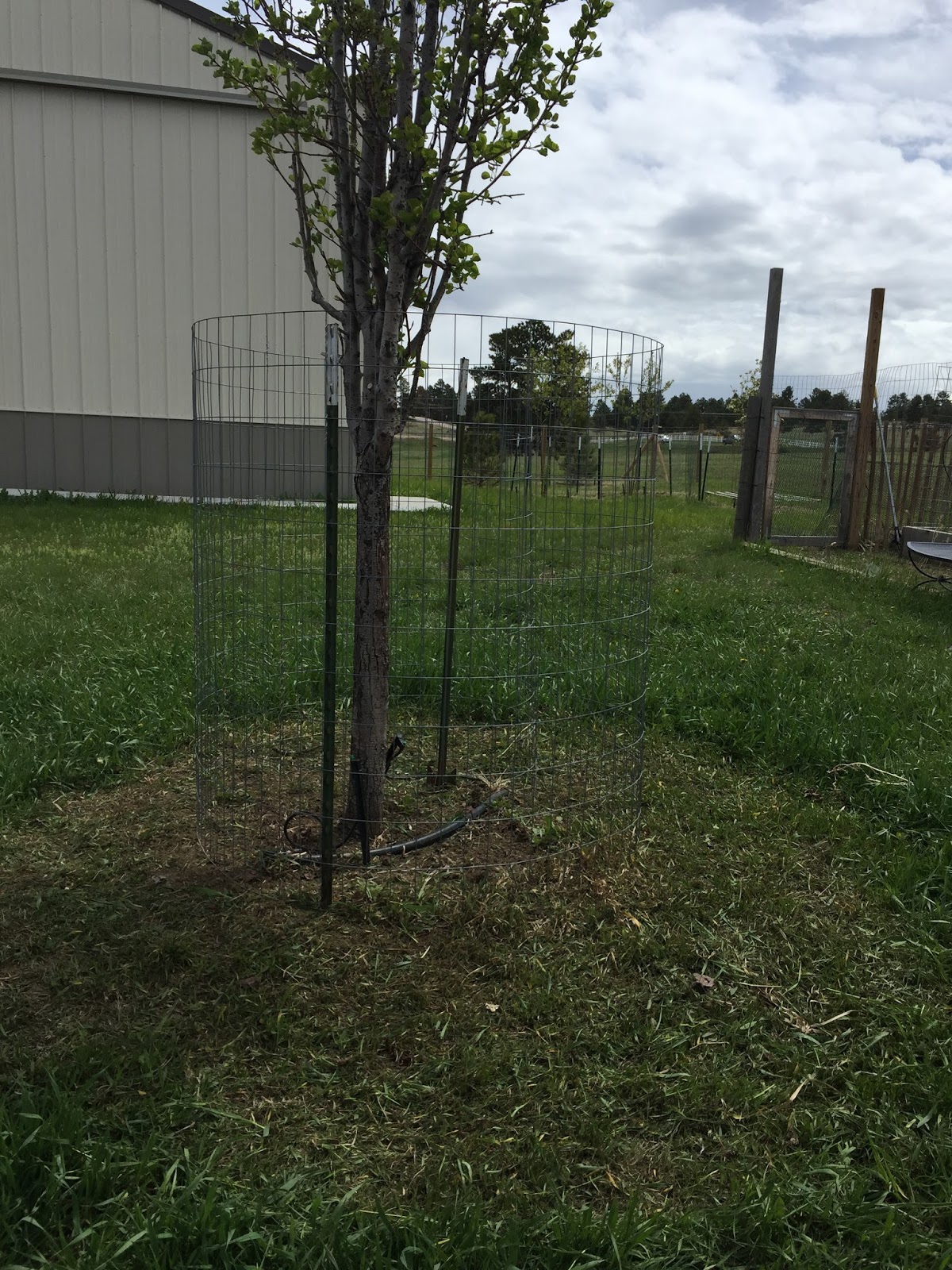 |
| Grass is cut short around the trees, and I have raked up all mulch. I'll just have to water a bit more often this year. |
 |
| Black Box trap that I used for Pocket Gophers. I don't know if they'll work with Voles. I guess I'll find out! |


